




BLOG

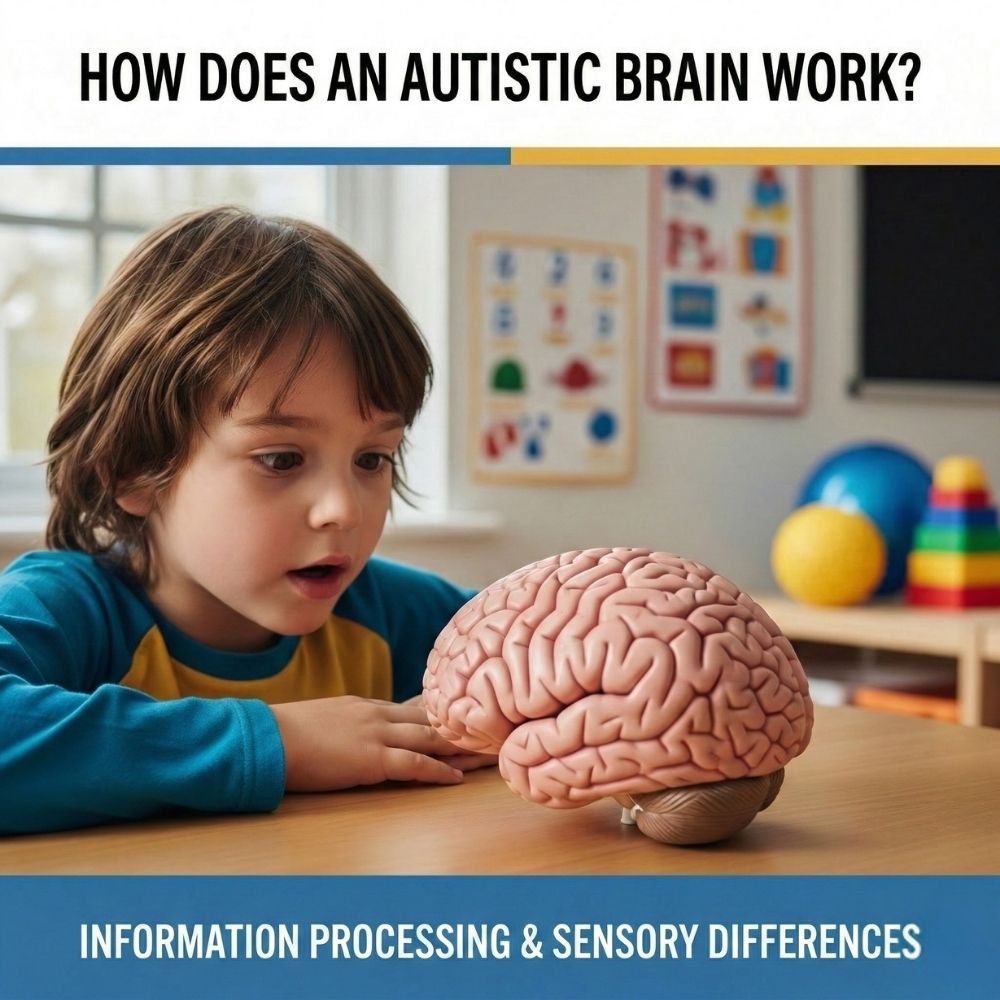
Autism Spectrum Disorder (ASD) is a complex neurodevelopmental condition that affects how individuals perceive, interact with, and process the world around them. In recent years, there has been a shift from understanding autism purely through behavioral traits to exploring the underlying neurobiological factors. This new perspective emphasizes how differences in brain function, connectivity, and sensory processing contribute to the unique experiences of individuals on the autism spectrum. In this blog post, we will explore how the autistic brain works, focusing on its information processing and sensory differences, supported by current scientific research.
For more information on autism therapies and support, please visit our contact page.
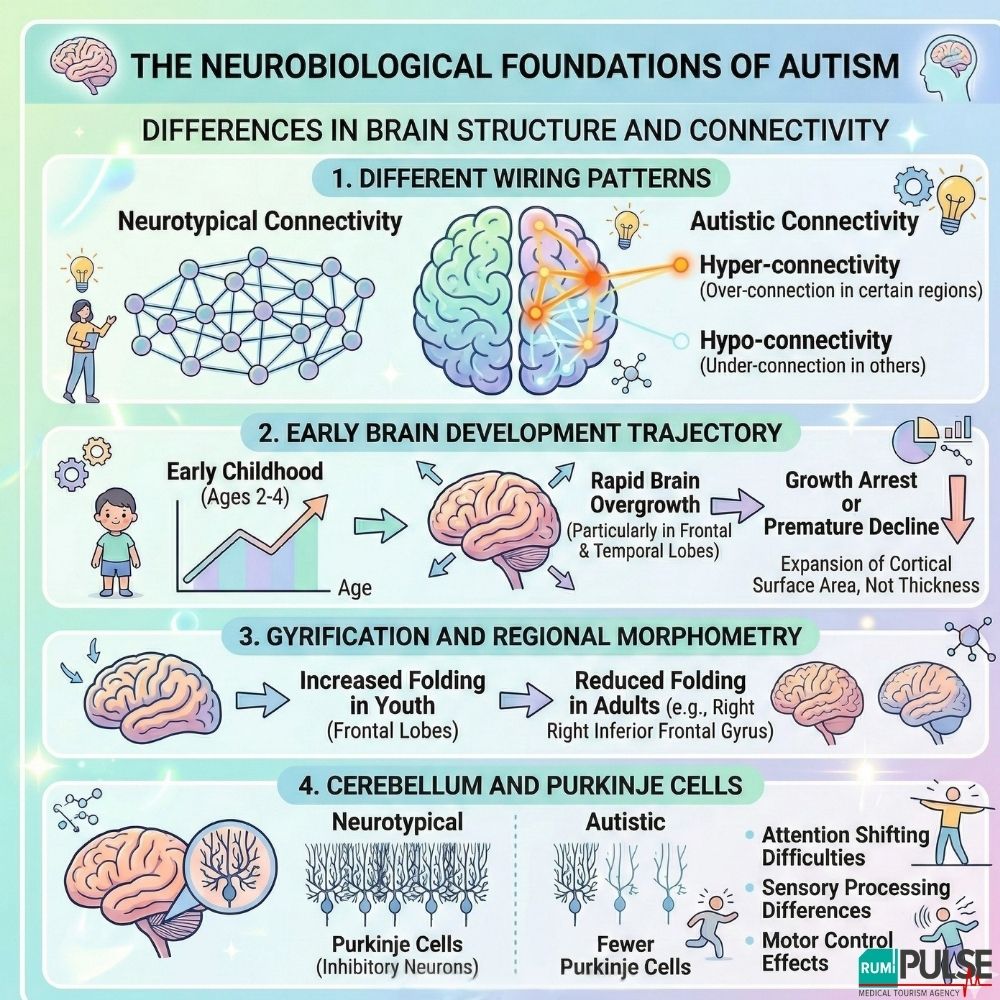
The brain of an individual with autism is organized in a fundamentally different way than a neurotypical brain. This difference is not merely about behavior, but rather how the brain organizes its structural and functional networks. Autism has moved from being understood as a disorder caused by behavioral deficits to being defined as a neurobiological condition, where the brain's structure and connectivity play key roles in shaping sensory experiences, cognition, and social behaviors.
The autistic brain is often described as having a different wiring pattern—one that involves both over-connection in certain regions and under-connection in others. This phenomenon helps explain the sensory and cognitive differences often experienced by individuals with autism.
One of the most significant neurobiological features of autism is early brain overgrowth. Research has shown that between the ages of 2 and 4, children with autism experience a rapid increase in brain volume, particularly in the frontal and temporal lobes. These regions are critical for functions such as executive functioning, social cognition, and language processing. However, this rapid growth is not sustainable and is often followed by periods of growth arrest or premature decline.
This overgrowth primarily involves an expansion of the cortical surface area, rather than cortical thickness. This early expansion points to a developmental pattern that differs significantly from that of neurotypical children, potentially laying the foundation for the cognitive and sensory characteristics of autism.
If you're interested in exploring autism therapy options, please visit our therapies page.
The structure of the autistic brain also shows unique patterns of cortical folding, known as gyrification. These patterns are particularly prominent in the frontal lobes of children with autism, reflecting the earlier cortical surface expansion. However, studies in adults have shown that certain areas of the brain, such as the right inferior frontal gyrus, have reduced gyrification, which could indicate long-term consequences of the early brain overgrowth.
Subcortical regions, like the cerebellum, also exhibit differences in autism. The cerebellum, which is involved in motor control and coordination, has been found to have fewer Purkinje cells—key inhibitory neurons—among individuals with autism. This cellular reduction may contribute to difficulties in attention shifting and sensory processing.
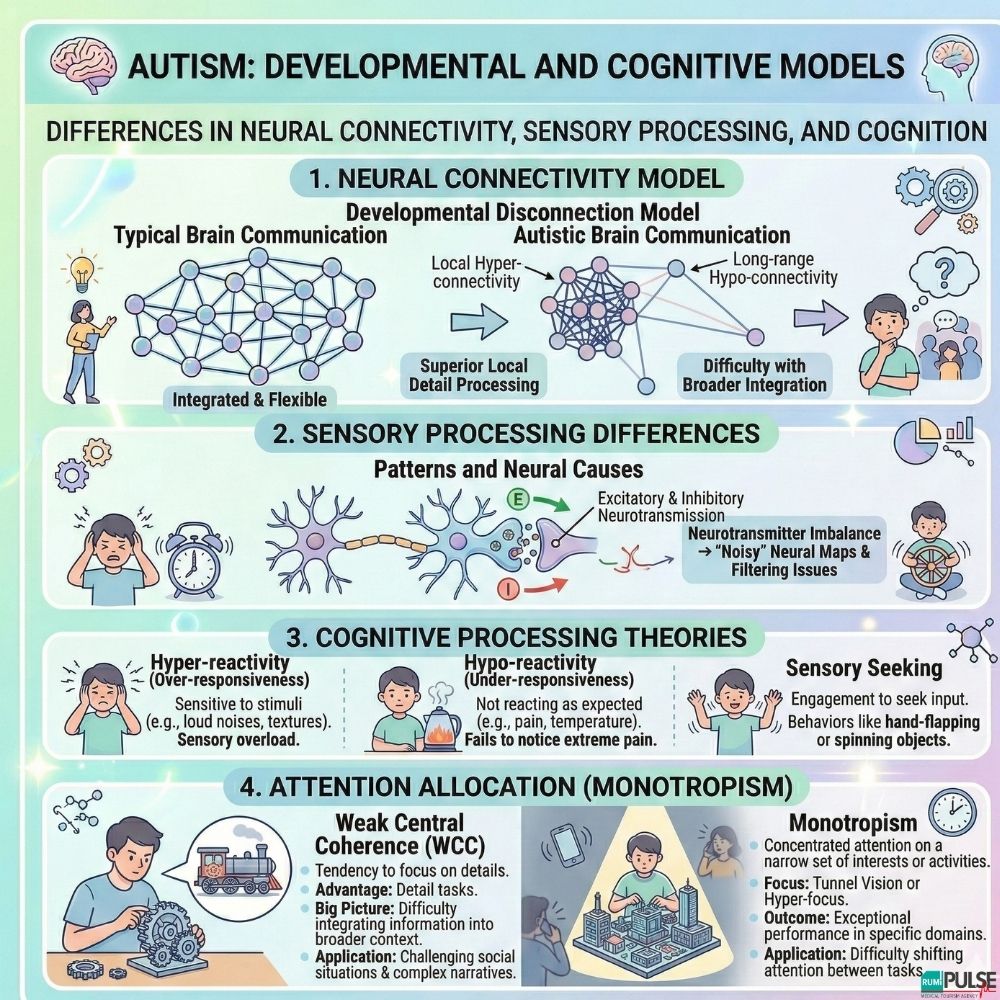
The "Developmental Disconnection Syndrome" theory provides a framework for understanding the cognitive and behavioral differences in autism. It suggests that the core challenges in autism arise from a fundamental imbalance in how brain regions communicate with one another. Specifically, there is local hyper-connectivity within certain brain modules and long-range hypo-connectivity between regions that would normally be integrated.
This connectivity imbalance can lead to superior performance in tasks requiring high-resolution, local analysis (such as recognizing details in a complex visual scene), but it complicates tasks that require broader integration, such as understanding social cues or processing complex, dynamic stimuli.
Sensory processing differences are a hallmark of autism, affecting the vast majority of individuals on the spectrum. These differences in sensory perception are largely the result of altered neural circuits involved in sensory perception.
There are several distinct patterns of sensory processing in autism:
These differences are often linked to an imbalance in excitatory and inhibitory neurotransmission in the brain, which can result in “noisy” neural maps and difficulties filtering out irrelevant sensory stimuli. This imbalance is thought to create the sensory overload that is frequently reported by individuals with autism.
Understanding how the autistic brain processes information has led to the development of theories such as Weak Central Coherence (WCC) and Monotropism.
Weak Central Coherence theory, proposed by Uta Frith, suggests that individuals with autism tend to focus on details rather than seeing the "big picture." While this can be an advantage in tasks that require attention to small details, it can make it difficult to integrate information into a broader context, which is essential for understanding social situations and complex narratives.
Monotropism is a theory that focuses on how attention is allocated in autism. It suggests that individuals with autism often concentrate their attention on a narrow set of interests or activities, leading to hyper-focus or "tunnel vision." This intense focus can lead to exceptional performance in specific domains but may also result in difficulty shifting attention to other tasks.
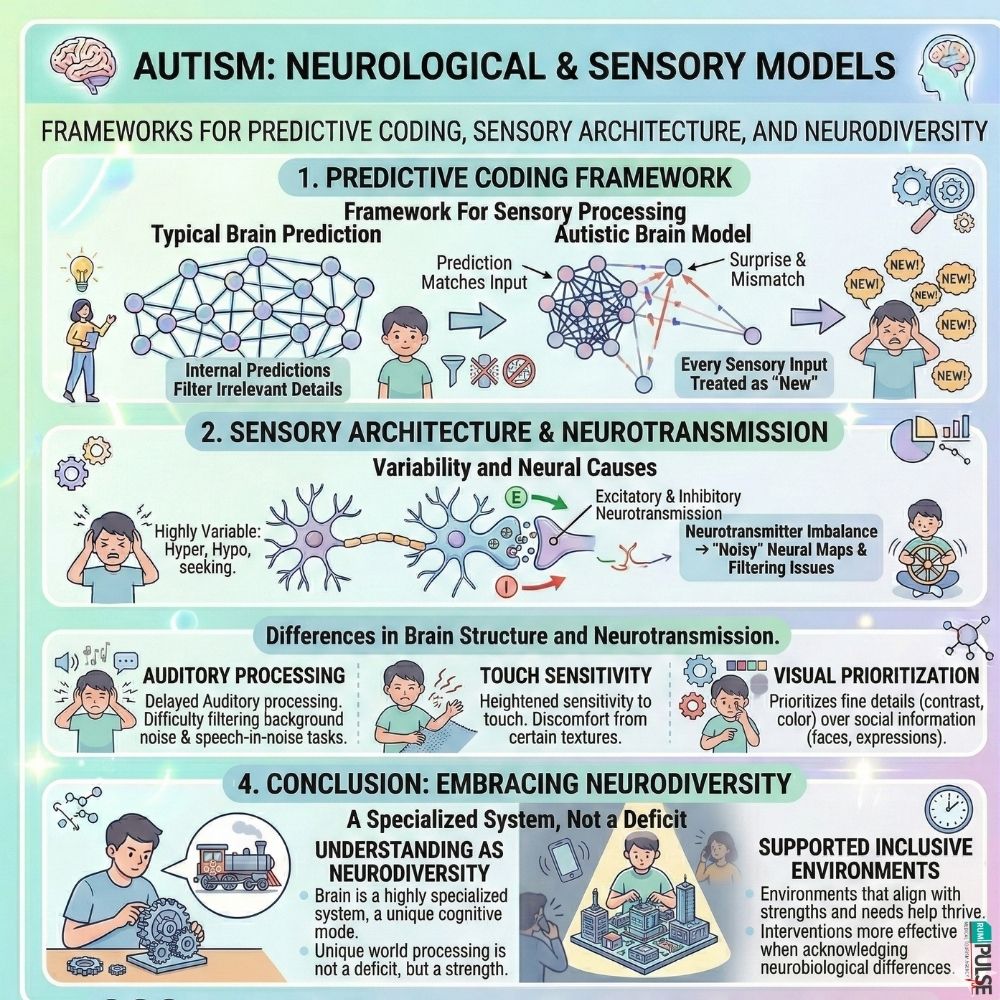
A key theory for understanding sensory processing in autism is the Predictive Coding framework. This model suggests that the brain is constantly making predictions about sensory input in order to minimize surprises. In the typical brain, sensory information is integrated with internal predictions, which helps filter out irrelevant details. In the autistic brain, however, every sensory input is treated as "new" or "unexpected," even if it has been encountered before. This leads to heightened sensitivity to sensory stimuli and can result in sensory overload.
Sensory processing in autism is highly variable. The brain may either be hyper-responsive or under-responsive to sensory stimuli, and sensory-seeking behaviors are also common. This variability is due to differences in brain structure and neurotransmission that affect how stimuli are processed.
For example, auditory processing in autism is often delayed, leading to difficulty filtering background noise and challenges in speech-in-noise tasks. Similarly, individuals with autism may have heightened sensitivity to touch, often feeling discomfort from certain textures. The visual system in autism tends to prioritize fine details, such as contrast and color, over social information like faces or expressions.
The autistic brain is a highly specialized system, one that processes the world in unique ways. These differences in information processing and sensory perception are not deficits, but rather represent a different mode of cognitive functioning. Understanding these differences as aspects of neurodiversity can help create a more inclusive world, where individuals with autism are supported in ways that align with their strengths and needs.
Interventions can be more effective when they acknowledge the neurobiological differences inherent in autism. By creating environments that cater to the sensory and cognitive needs of individuals with autism, we can help them thrive and harness their unique talents.
Get in touch with us for further assistance and inquiries on autism treatments.