




BLOG
Imagine a master key capable of opening any door in the human body.
A microscopic architect that can repair a damaged heart, rebuild torn cartilage, or restore lost vision.
This isn't science fiction; it is the reality of stem cell therapy.
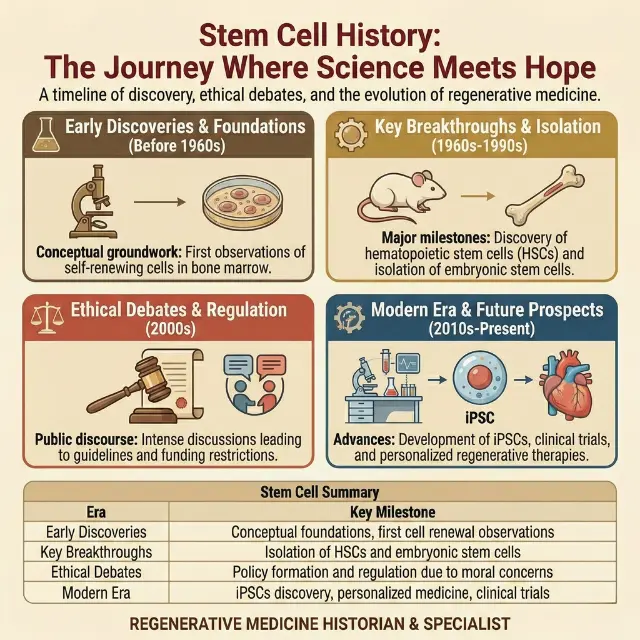
Today, we often hear about regenerative medicine in the news, but this technology didn't appear overnight.
It is the result of decades of curiosity, accidental discoveries, and relentless dedication.
For anyone researching medical advancements in London, Manchester, or anywhere across the globe, understanding the history of these cells is crucial to understanding the future of healthcare.
In this article, we will travel through time—from the accidental discoveries of the 1960s to the cutting-edge stem cell therapy treatments of 2026—exploring how a biological mystery became modern medicine’s greatest hope.
The story of stem cell therapy begins not with a plan to cure diseases, but with a fear of nuclear consequences.
In the post-war era of the 1960s, scientists were desperately trying to understand the effects of radiation on the body.
Two Canadian researchers, James Till and Ernest McCulloch, were studying radiation effects in mice.
They noticed something peculiar: small lumps on the spleens of the mice. Upon closer inspection, they realised these lumps were colonies of cells that had originated from a single cell type.
These cells had the unique ability to renew themselves and differentiate into various blood cells.
This was the "Eureka!" moment. They had discovered Hematopoietic Stem Cells (HSCs).
This discovery laid the foundation for the very first form of stem cell therapy: the bone marrow transplant.
Today, this procedure has saved thousands of lives, particularly those battling leukaemia and lymphoma, proving that the body holds the power to heal itself if given the right tools.
While bone marrow transplants were becoming a standard medical procedure, scientists knew there was more to uncover.
Adult stem cells were powerful, but they were "multipotent"—meaning they were somewhat limited in what they could become (e.g., blood stem cells could only make blood).
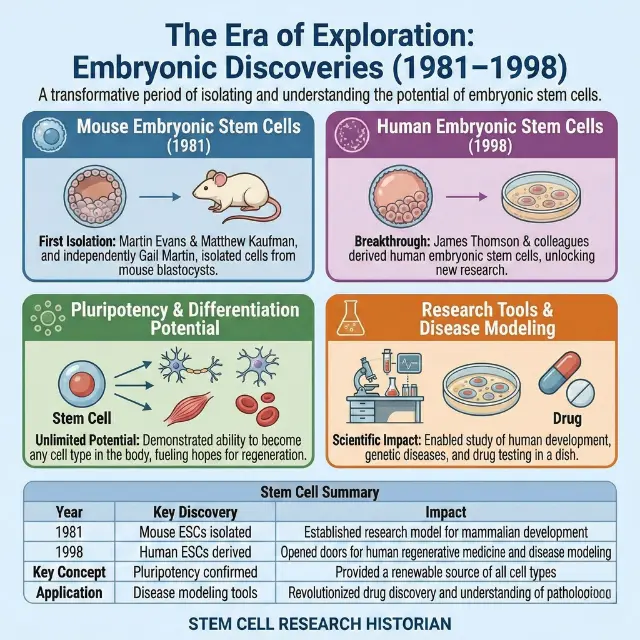
The scientific community was searching for "pluripotent" cells—cells that could become any tissue in the body.
This era was a double-edged sword. While the potential for stem cell therapy grew exponentially, it also sparked intense global ethical debates regarding the source of these cells.
These discussions pushed the scientific community to look for alternative, ethically neutral sources without sacrificing the therapeutic potential.
If there is one date that defines the modern era of regenerative medicine, it is 2006.
This was the year science fiction became science fact.
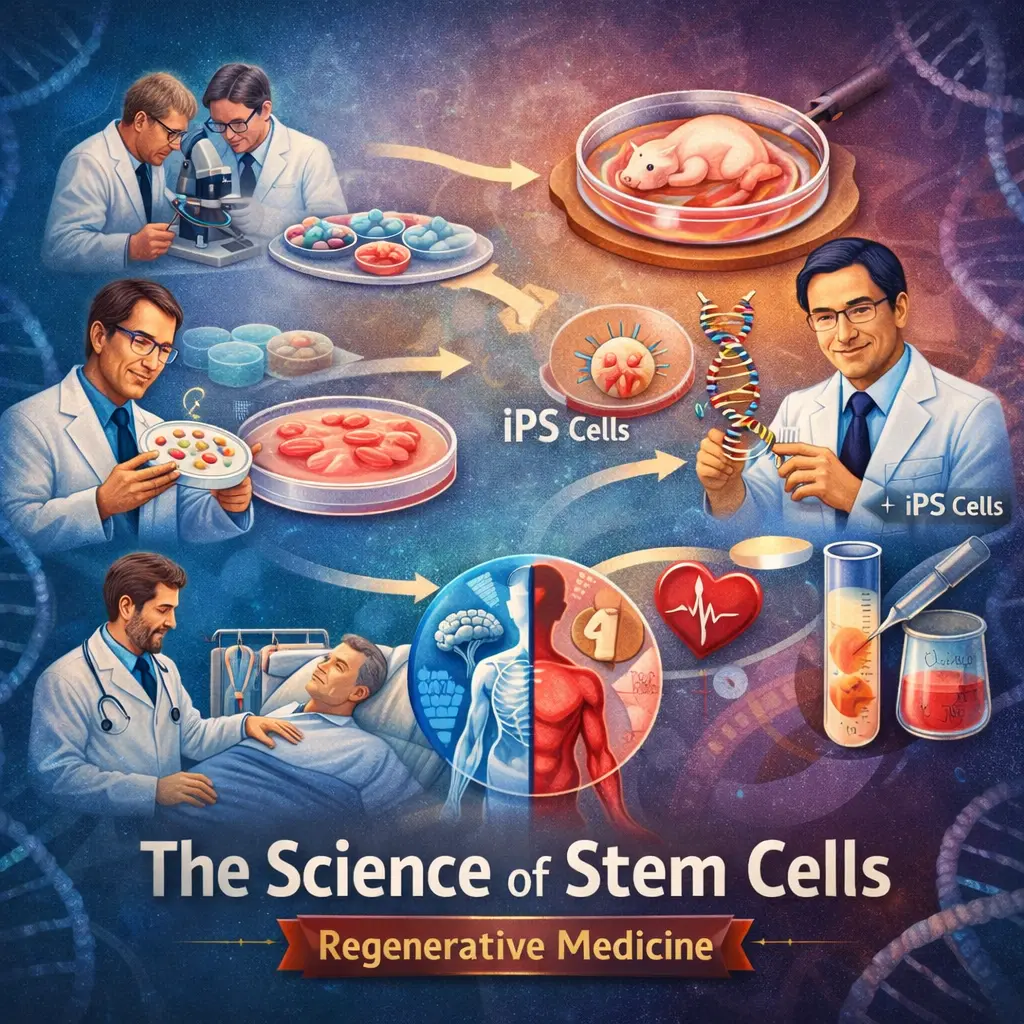
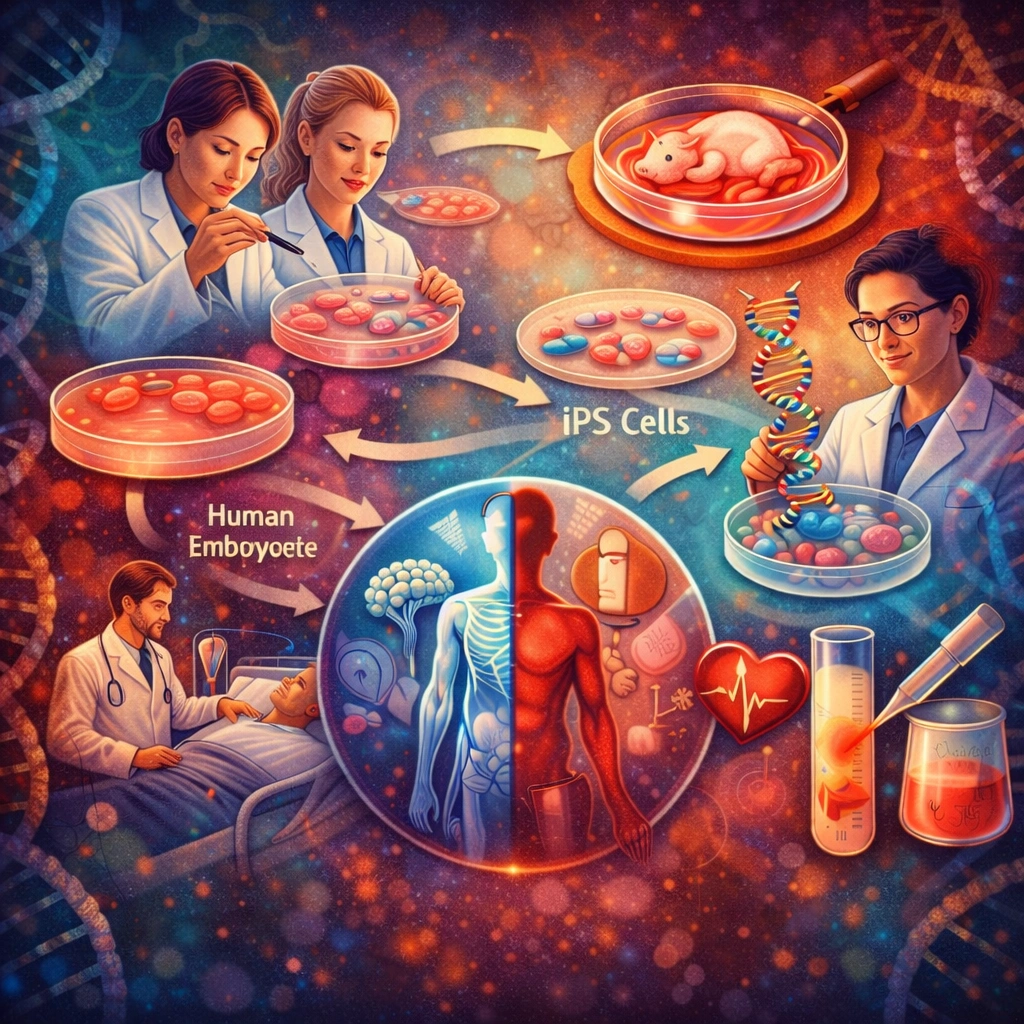
Japanese researcher Shinya Yamanaka stunned the world by discovering a way to "reprogram" adult cells.
By adding just four specific genes to a simple skin cell, he was able to turn back its biological clock, converting it into an embryonic-like state. These were named Induced Pluripotent Stem Cells (iPSCs).
Why was this revolutionary for stem cell therapy?
Yamanaka’s discovery won the Nobel Prize and accelerated research in major biotech hubs, from Cambridge to California.
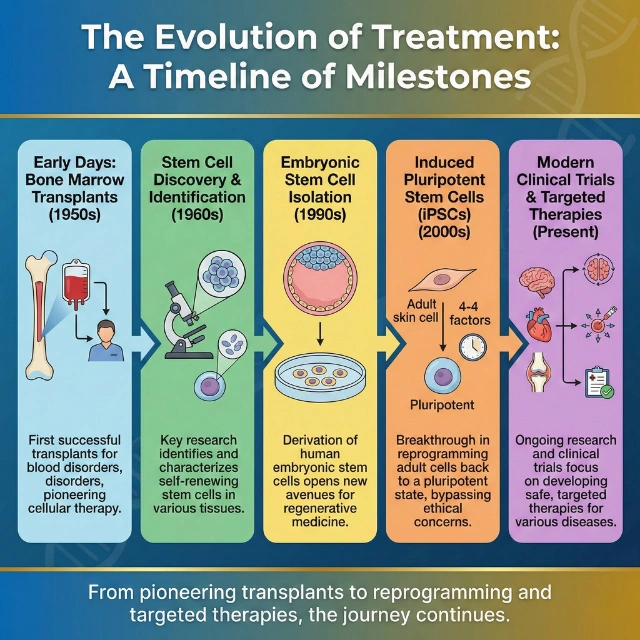
To understand how rapidly this field has moved from the Petri dish to the patient, let’s look at the key milestones that have shaped the current landscape of stem cell therapy.
| Decade | Key Milestone | Impact on Medicine |
| 1950s-60s | First successful bone marrow transplant. | Proven that cells can regenerate a failing immune system. |
| 1978 | Discovery of stem cells in human cord blood. | Offered a new, non-invasive source for transplants. |
| 1998 | Isolation of human embryonic stem cells. | Revealed the potential to create any tissue type. |
| 2006 | Creation of Induced Pluripotent Stem Cells (iPSCs). | Solved major ethical issues and enabled personalised therapy. |
| 2010s | First clinical trials for spinal cord injury and retinal disease. | Stem cell therapy moved from theory to practice. |
| 2020s | Rise of Mesenchymal Stem Cell (MSC) therapies. | Focus shifted to inflammation control and autoimmune diseases. |
While iPSCs captured headlines, another type of cell has quietly become the workhorse of modern private clinics and aesthetic medicine: Mesenchymal Stem Cells (MSCs).
Discovered in the 1970s but fully understood only recently, MSCs are found in bone marrow, fat tissue (adipose), and umbilical cord tissue.
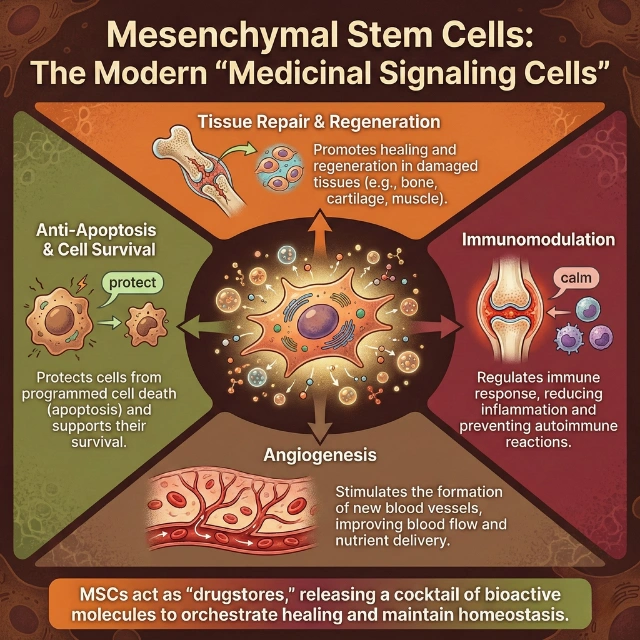
Unlike other cells that primarily aim to replace tissue, MSCs act like a "drugstore.
" When injected into the body, they seek out inflammation and damage. Once there, they release potent bioactive molecules that:
Today, when people search for stem cell therapy for knee pain, anti-aging, or hair loss, they are usually looking at treatments involving MSCs.
Their safety profile and ability to be harvested easily have made them the gold standard in current regenerative applications.
The interest in this field is not just anecdotal; it is backed by massive growth and investment.
For patients researching options, understanding the scale of this industry provides reassurance about its legitimacy.
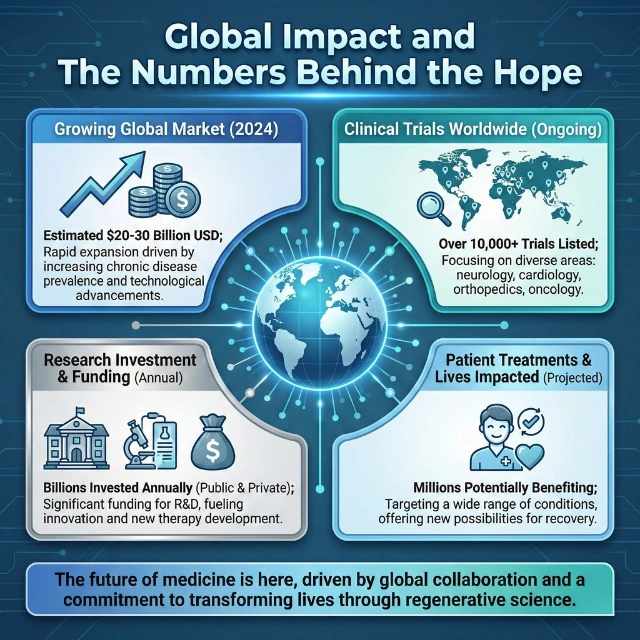
According to recent global biotechnology reports:
These numbers indicate that stem cell therapy is no longer "experimental" in the fringe sense; it is a rapidly maturing pillar of modern medicine.
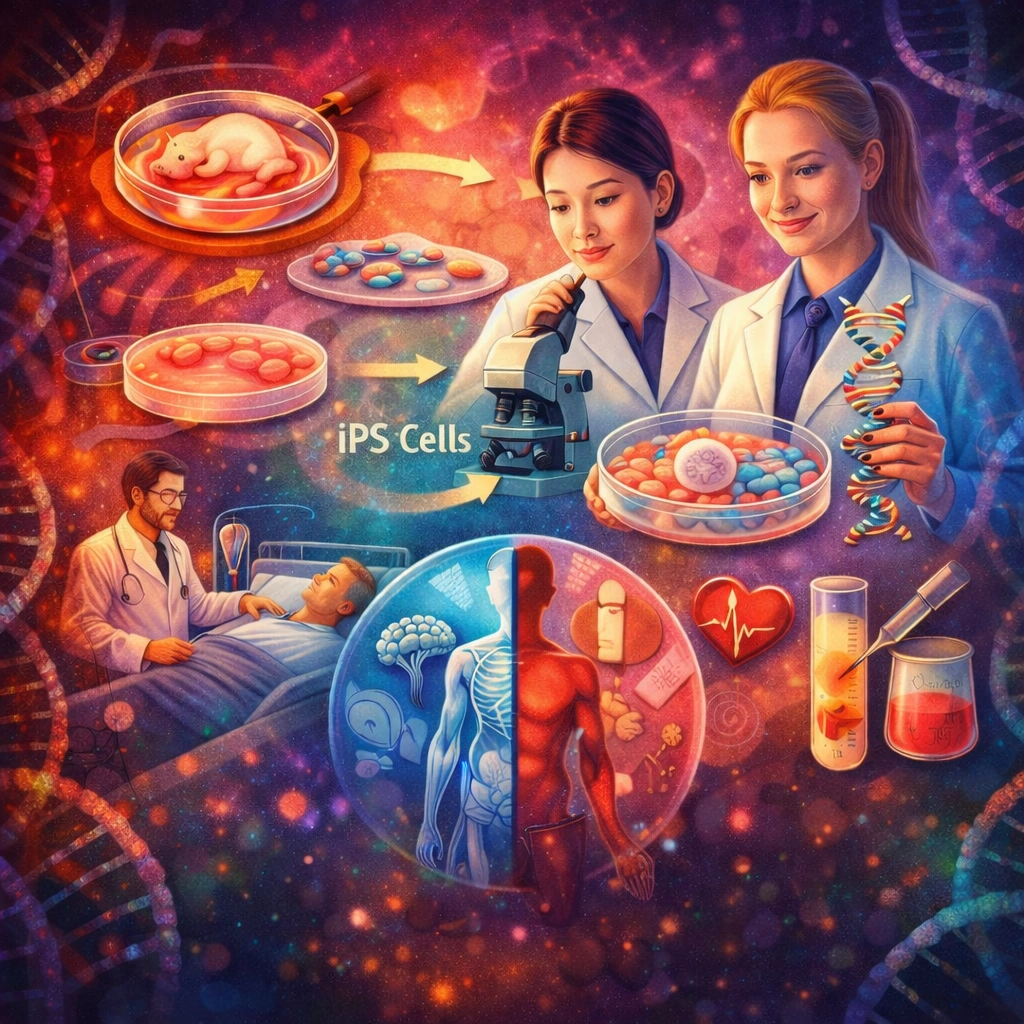
History is fascinating, but patients care about the "now." Today, stem cell therapy is being explored and used for a diverse range of conditions.
The science has moved beyond blood cancers into areas that affect quality of life.
This is perhaps the most common application. Elite athletes and active individuals use stem cell therapy to accelerate recovery from tendonitis, ligament tears, and osteoarthritis.
The goal is to regenerate cartilage and reduce pain without invasive joint replacement surgery.
There is immense hope for conditions like Multiple Sclerosis (MS), Parkinson’s, and stroke recovery.
Treatments focus on remyelination (repairing the protective sheath around nerves) and reducing neuroinflammation.
Conditions like Crohn’s disease and Lupus involve an immune system that attacks the body.
Stem cell therapy is being used to "reset" the immune system, teaching it to stop attacking healthy tissue.
From the serendipitous experiments of the 1960s to the sophisticated, targeted treatments of today, the history of stem cells is a testament to human ingenuity.
We have moved from observing these cells under a microscope to using them to change lives.
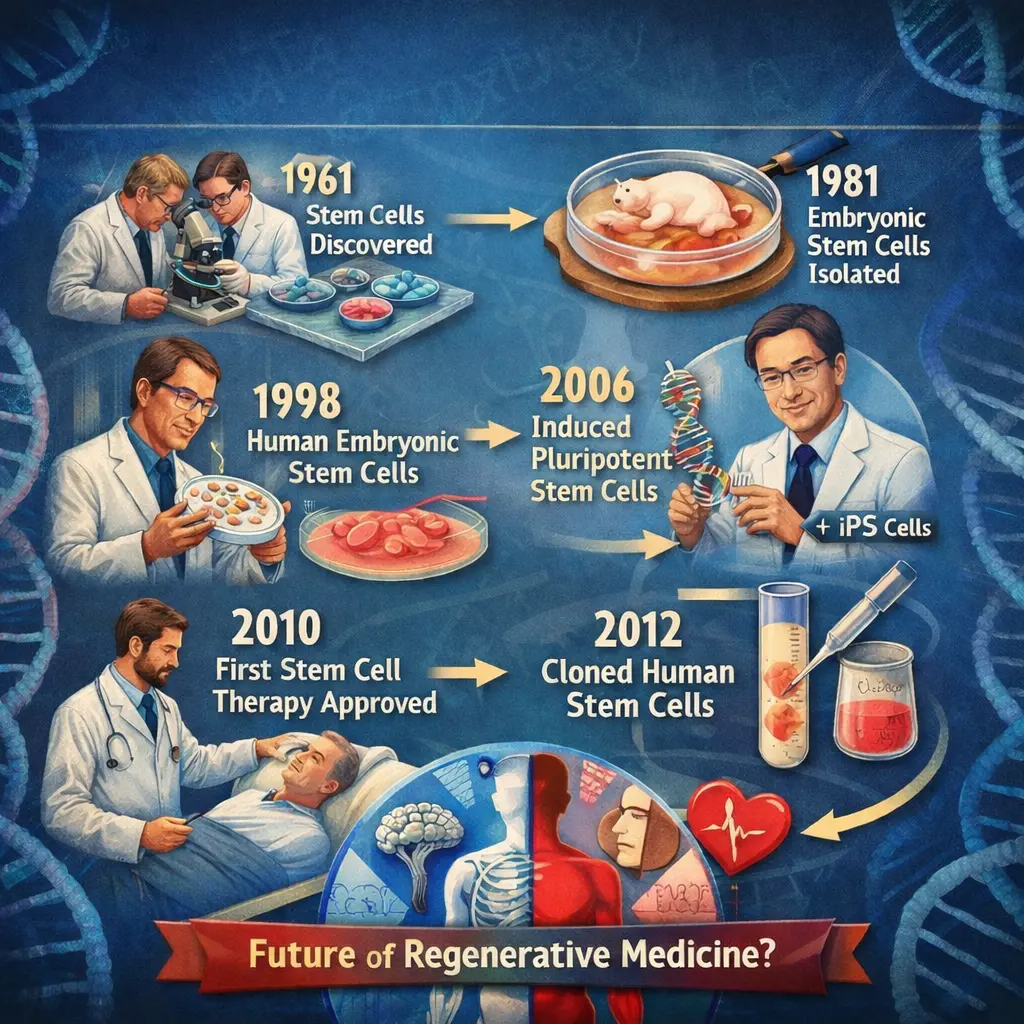
Stem cell therapy represents a paradigm shift. We are no longer just treating symptoms; we are learning to repair the root cause of the disease.
For anyone considering this path, the journey of science has provided a solid foundation of hope.
As research continues to accelerate, the next chapter of this history book will likely be written not in a lab, but in the recovery stories of patients around the world.