




What is Digital Autism



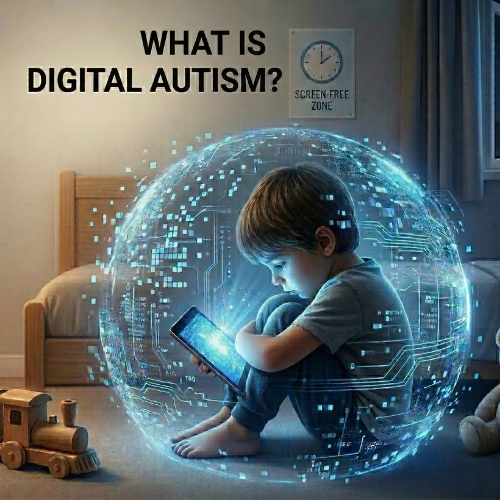
In the 21st century, with the rapid rise of digital technology, children are increasingly exposed to screens, often from a very young age. This shift has raised concerns about the effects of excessive screen time on childhood development. One of the emerging concerns is a condition often referred to as "digital autism" or "virtual autism." While not an official medical diagnosis, it describes a set of behavioral and cognitive symptoms that mimic Autism Spectrum Disorder (ASD) but are believed to be caused by excessive digital device exposure. In this blog, we will explore what digital autism is, its symptoms, and strategies for preventing it. For more information on autism therapies and treatment options, please visit our Autism Therapy Page.
Digital autism refers to developmental issues that emerge due to excessive screen time, particularly in early childhood. While it is not yet formally recognized as a clinical condition, it has gained attention as more children are spending increasingly large amounts of time on digital devices. The symptoms of digital autism often resemble those seen in Autism Spectrum Disorder, but they are believed to be induced by environmental factors—specifically, too much screen exposure.
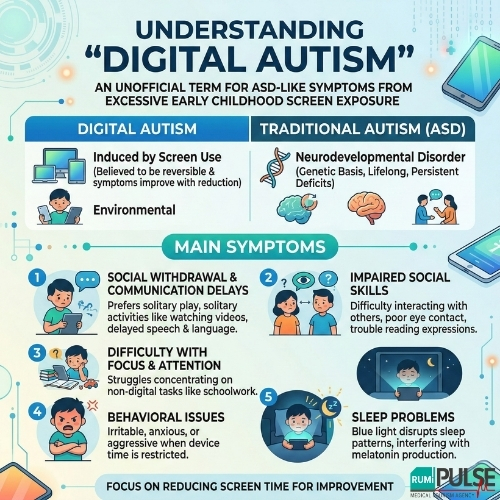
Autism Spectrum Disorder (ASD) is a well-established neurodevelopmental disorder with a genetic basis, characterized by persistent deficits in social communication and restricted, repetitive behaviors. ASD typically appears in early childhood, often before the age of three, and its symptoms are lifelong.
On the other hand, digital autism arises as a consequence of environmental factors, particularly the overuse of digital screens during critical periods of brain development. Children with digital autism often display behaviors such as social withdrawal, delayed speech, and repetitive actions, which are similar to the symptoms of ASD. However, unlike ASD, digital autism symptoms are reversible and tend to improve once screen exposure is reduced or eliminated. If you'd like to know more about therapies for autism, please visit our Autism Therapy Page.
The symptoms of digital autism can vary, but they generally include the following:
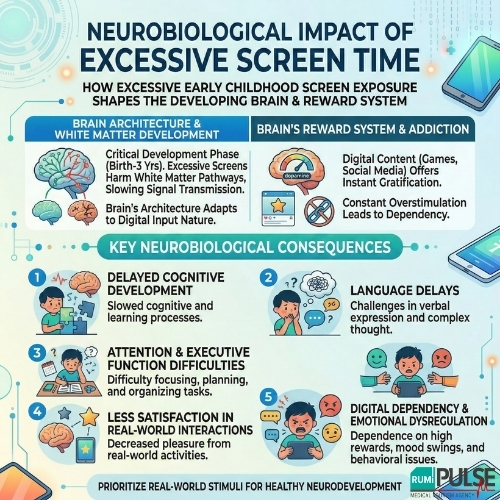
Excessive screen exposure, particularly during early childhood, has a significant impact on brain development. The brain undergoes rapid growth and synapse formation between birth and the age of three. During this time, the brain is most responsive to environmental stimuli. However, when the primary stimuli are digital screens, the brain’s architecture begins to adapt to the nature of the input it is receiving. Research has shown that prolonged screen exposure can negatively affect the development of white matter, which is responsible for transmitting signals between different regions of the brain. This can result in delayed cognitive and language development, as well as difficulties with attention and executive function.
Another significant impact of screen exposure is the effect on the brain’s reward system. Digital content, particularly video games and social media, is designed to capture attention and reward the user with instant gratification. This constant stimulation can lead to a form of "digital addiction," where children become dependent on the high rewards that screens provide. The overstimulation of the brain's reward system can make it harder for children to find satisfaction in real-world interactions, leading to emotional dysregulation and behavioral issues.
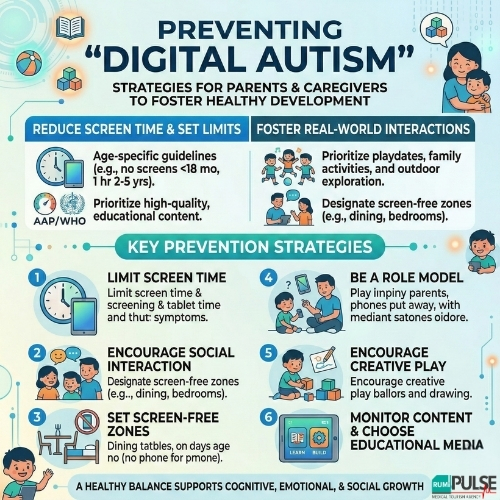
Preventing digital autism involves limiting screen time and encouraging healthy, developmentally appropriate activities. Here are some key strategies for parents and caregivers:
While digital autism is not officially recognized as a medical condition, it is an important emerging concern in the field of child development. Excessive screen exposure can mimic the symptoms of Autism Spectrum Disorder, leading to social withdrawal, communication delays, and behavioral issues. However, unlike traditional ASD, digital autism is an environment-induced syndrome that can be reversed with the removal of digital overstimulation and the restoration of real-world interactions.
By limiting screen time, encouraging face-to-face interactions, and fostering a healthy balance between technology and real-world experiences, parents can help mitigate the risk of digital autism and support their child's development. Ensuring that children engage in a variety of activities that promote cognitive, emotional, and social growth is key to navigating the challenges of the digital age. For further information on autism therapies, including stem cell treatments, please visit our Autism Therapy Page.




.jpg)