



Autism and Epilepsy: A Challenging Journey for Families


Navigating the complexities of a neurodevelopmental diagnosis is never a linear path.
For many families, an initial diagnosis of Autism Spectrum Disorder (ASD) is later followed by the emergence of epilepsy.
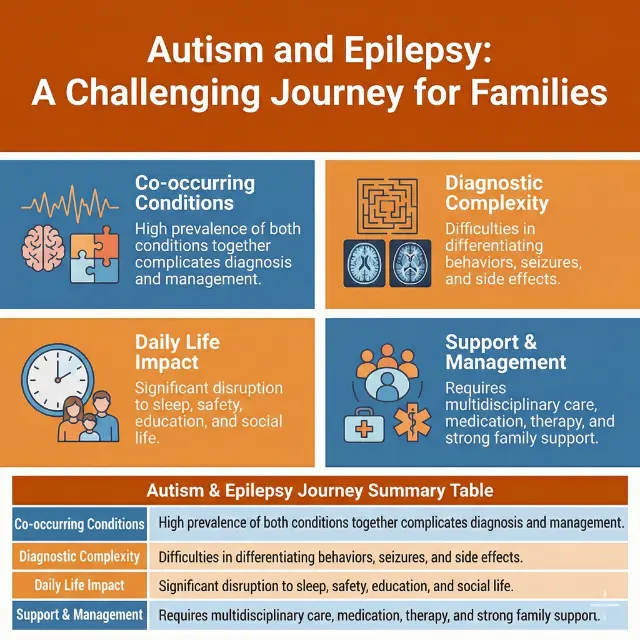
This intersection creates a unique set of challenges that requires not only medical expertise but also a profound level of emotional resilience.
As we delve into the latest scientific breakthroughs, stem cell therapy is emerging as a focal point of discussion for families seeking to improve the quality of life for their loved ones.
In this blog, we will explore the deep-rooted connection between these two conditions, the biological mechanisms at play, and how modern regenerative medicine—specifically stem cell therapy—is offering a new horizon of hope.
.webp)
The co-occurrence of autism and epilepsy is not a coincidence. Clinical data indicates that these two conditions often share a common biological foundation.
Research suggests that disruptions in the brain's "excitatory and inhibitory balance" play a major role.
When the electrical activity in the brain becomes imbalanced, it can manifest as both the social-communication challenges of autism and the electrical "storms" known as seizures.
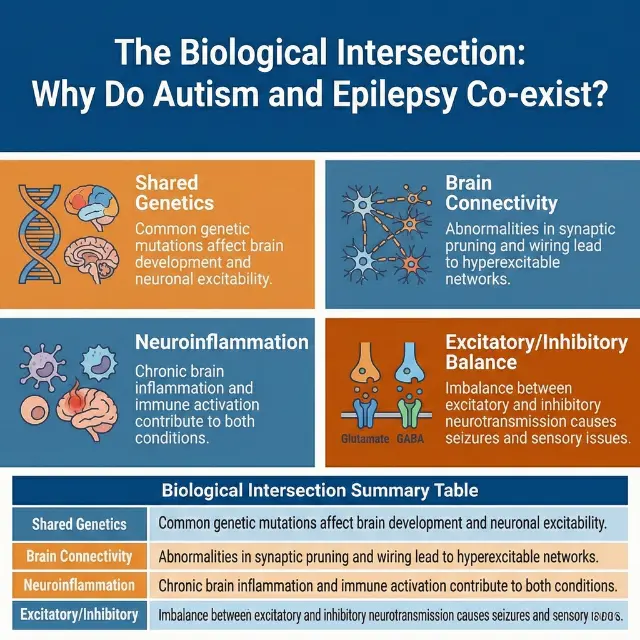
One of the most significant factors being studied today is neuroinflammation.
A brain in a constant state of inflammation is more susceptible to both behavioral symptoms and seizure activity.
This is precisely where stem cell therapy enters the conversation.
By targeting the underlying inflammatory processes, stem cell therapy aims to harmonize the brain's internal environment, potentially reducing the frequency of seizures while simultaneously supporting cognitive development.
Understanding the scale of this dual diagnosis helps families realize they are not alone.
Below is a breakdown of the prevalence rates and common characteristics observed in clinical settings:
| Category | Estimated Prevalence / Impact | Key Observation |
| Epilepsy in Autistic Individuals | 20% – 30% | Prevalence often increases as children reach adolescence and adulthood. |
| Autism in Individuals with Epilepsy | 10% – 15% | Higher incidence in those with early-onset or refractory seizures. |
| Risk with Intellectual Disability | ~33% | Individuals with both ASD and ID have a higher risk of developing epilepsy. |
| Gender Trends | 2:1 Ratio | While ASD is more common in males, epilepsy in ASD is more frequently observed in females. |
For years, treatment was limited to managing symptoms through anti-epileptic drugs (AEDs) and behavioral therapies.
However, these methods often fail to address the root cause: the damaged or inflamed neural environment.
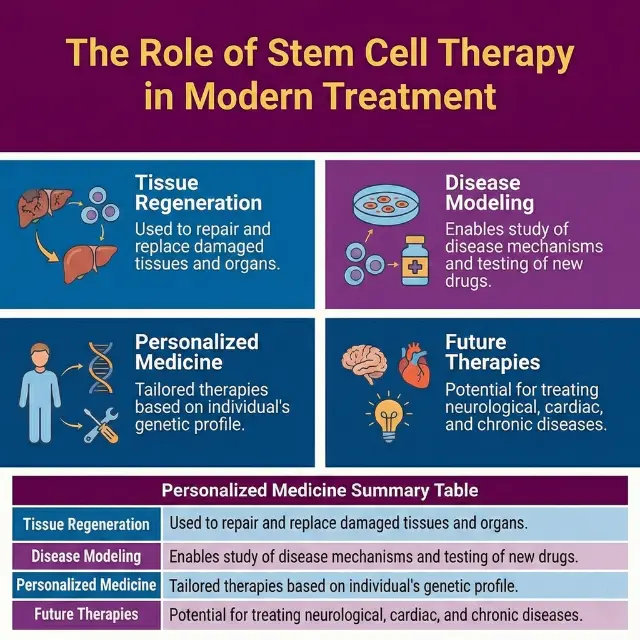
This has led to a surge of interest in stem cell therapy.
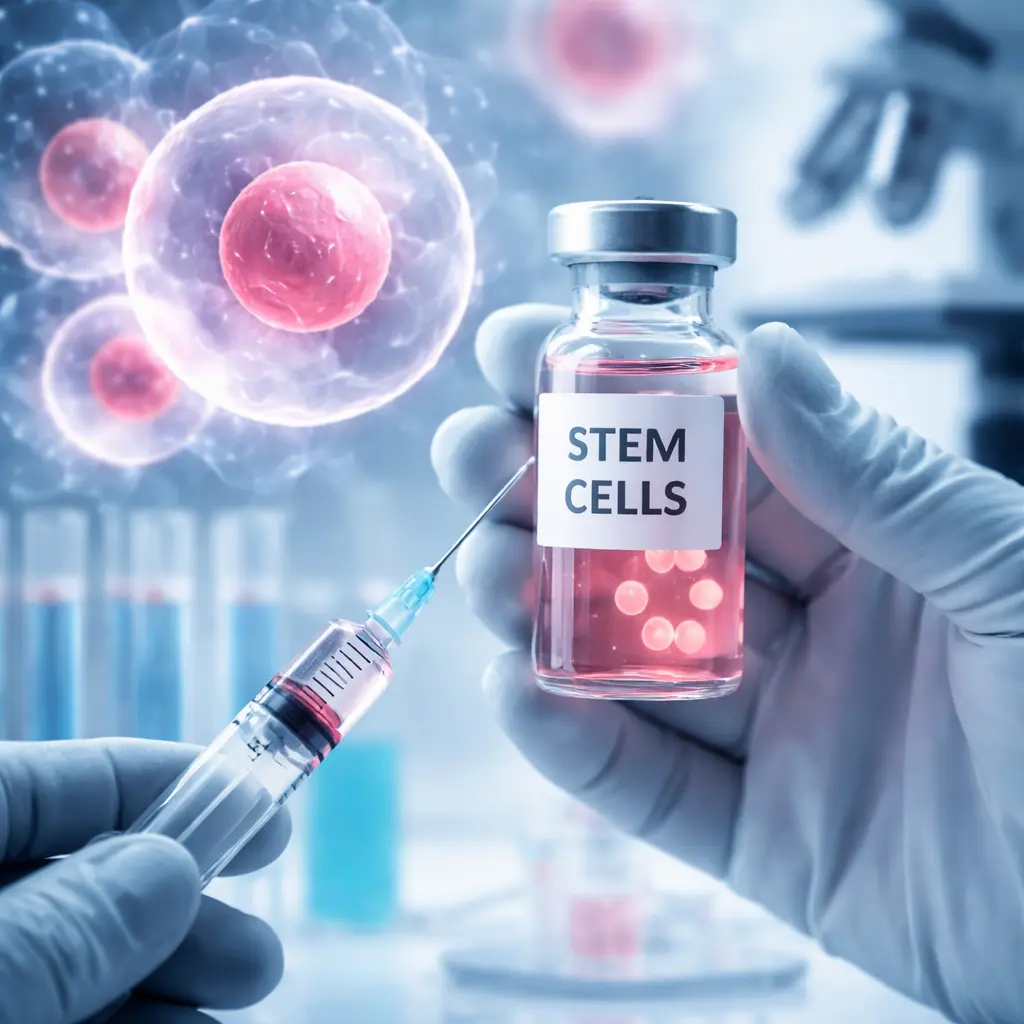
Stem cell therapy utilizes the body's natural "master cells" to promote healing. In the context of the autism-epilepsy journey, the primary goal of stem cell therapy is neuroprotection and immunomodulation.
When a child experiences both autism and epilepsy, the daily routine changes. Families often describe a "double-layered" challenge.
A "meltdown" might not just be a behavioral response; it could be a post-ictal state (the period following a seizure).
Conversely, a "staring spell" might be misidentified as autistic "zoning out" when it is actually an absence seizure.
Because these symptoms overlap, diagnostic precision is vital.
Families are increasingly looking toward integrative approaches where stem cell therapy is combined with traditional speech and occupational therapies.
The logic is simple: if stem cell therapy can improve the brain's overall "readiness" to learn by reducing internal stress, the behavioral therapies become significantly more effective.
Families should be aware of how seizures present, as they aren't always the "convulsive" type:
The field of regenerative medicine is moving at an incredible pace. Recent clinical observations have shown that stem cell therapy can lead to measurable improvements in various domains.
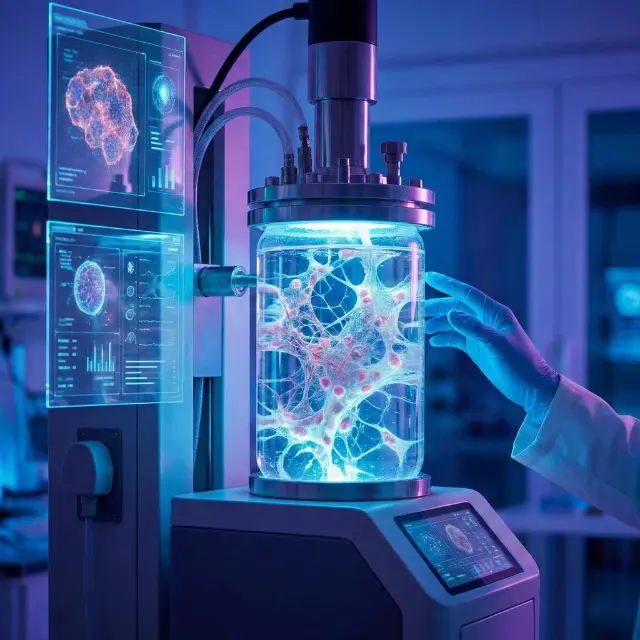
While every individual reacts differently, the data suggests a trend toward "gains" in areas that families value most.
Some clinical reports indicate that up to 85% to 90% of patients receiving targeted stem cell therapy show improvements in socialization, speech, or a reduction in the severity of seizures over a 12-month period.
These figures represent more than just numbers; they represent children who can finally make eye contact, or families who can sleep through the night without the constant fear of a nocturnal seizure.
The "challenging journey" mentioned in our title is often made harder by the feeling of helplessness.
Traditional medicine often suggests "waiting" to see if a child outgrows certain behaviors or if a medication will eventually work.
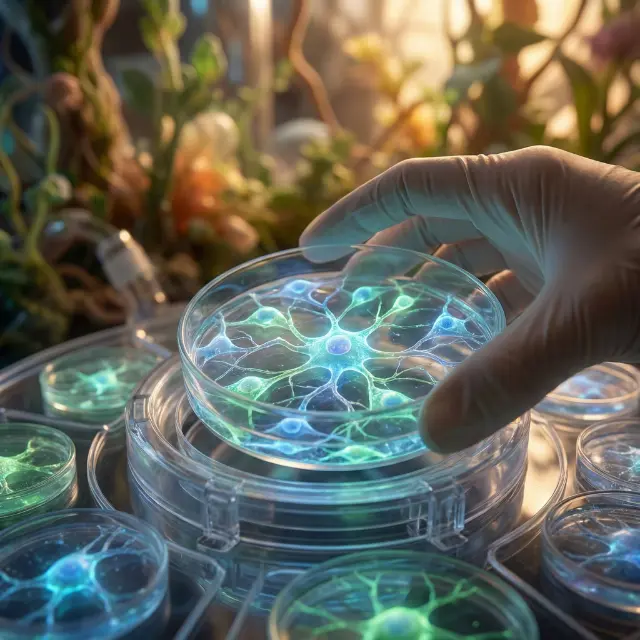
However, the window for neuroplasticity—the brain's ability to change—is most open during the younger years.
This is why many are bypassing the "wait and see" approach in favor of stem cell therapy.
By intervening early with stem cell therapy, families are attempting to provide the brain with the biological tools it needs to self-repair before inflammatory damage becomes more permanent.
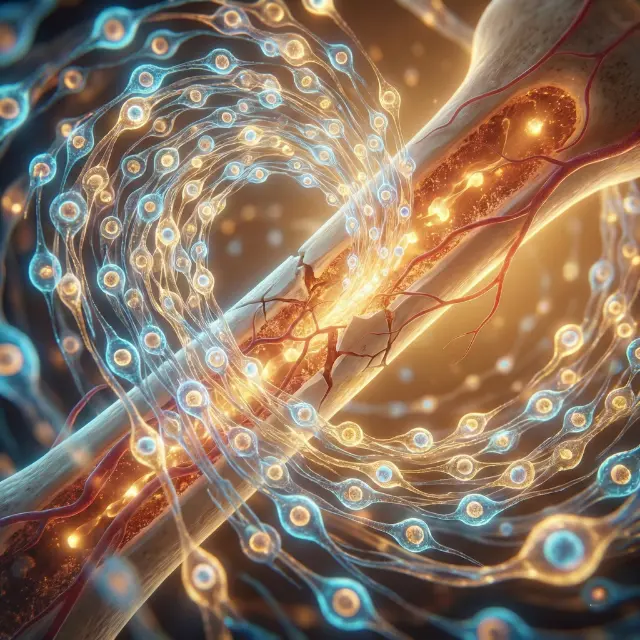
At Rumi Pulse, we offer a specially designed 3-day stem cell protocol for children fighting autism and epilepsy.
The program includes:
✔️ Individual assessment
✔️ Stem cell application
✔️ Personalized supplements
✔️ 3 nights of comfortable accommodation
✔️ Airport-hotel-clinic transfers
✔️ Expert and friendly support
The entire process is non-surgical, drug-free, and conducted using the child’s own cells for natural healing.
The intersection of autism and epilepsy is undeniably a heavy burden for any family to carry. It requires constant vigilance, medical advocacy, and an unwavering belief in a better future.
However, the narrative is shifting. We are moving away from a world of "management" and toward a world of "regeneration."
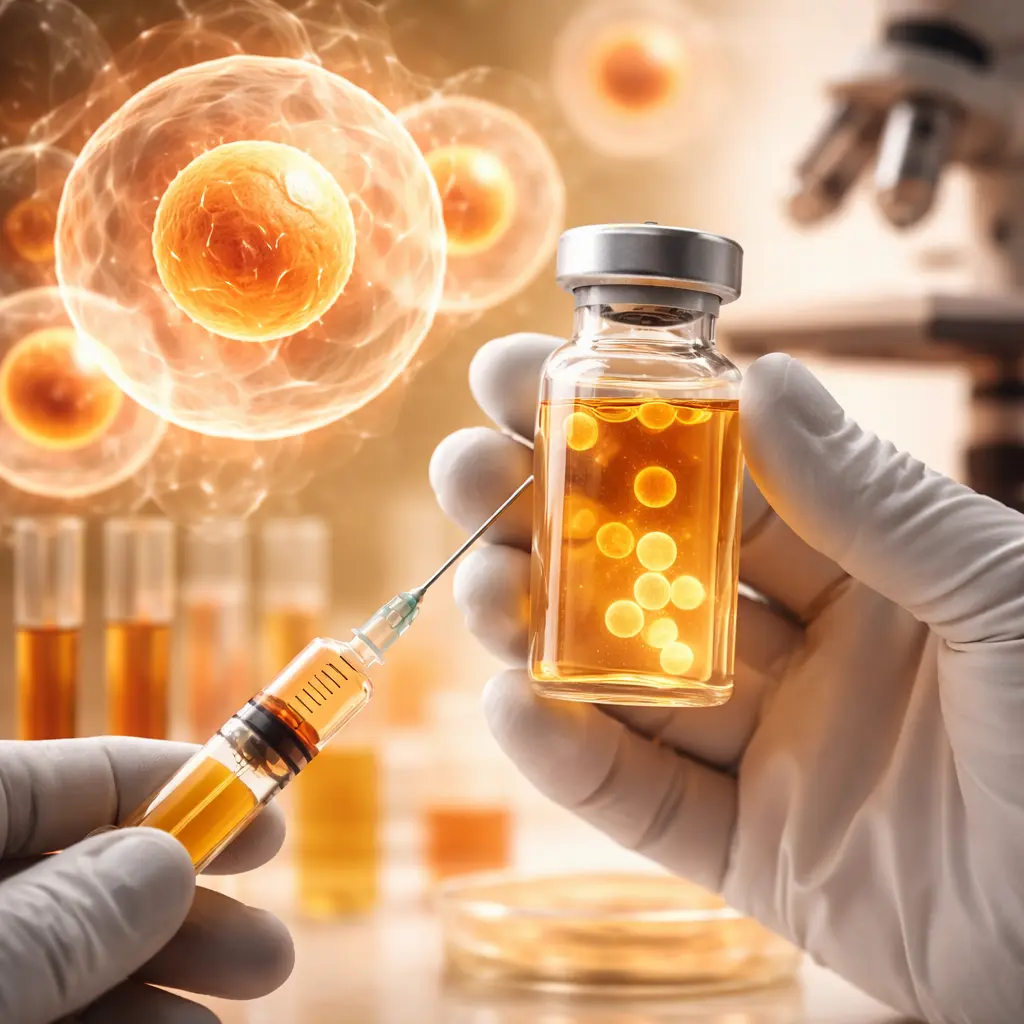
Through the continued development of stem cell therapy, we are unlocking the brain's potential to heal itself.
For the families on this journey, the road may be long, but with the support of cutting-edge science and a community of experts, it is a road that leads toward a brighter, more connected future.

.jpg)